
Views: 0 Author: Site Editor Publish Time: 2026-06-13 Origin: Site


Filling your own hardware offers immense control over ingredients and costs. However, pairing the wrong extract and standard hardware frequently leads to burnt coils, leaks, or severely clogged airways. The compatibility between an extract's viscosity and a cartridge’s heating architecture ultimately dictates the success of the hardware. Assuming all extracts work perfectly in any generic cartridge remains a common, yet highly costly, operational error. Different fluids behave differently under heat and pressure. You need specific intake hole sizes, coil porosities, and tank materials for specific viscosities. We designed this guide to provide an evidence-based framework. You will learn how to match specific fluid profiles to the correct empty vaporizer specifications. By following these operational guidelines, you will minimize product waste, protect volatile compounds, and ensure optimal vaporization every single time.
Viscosity is the primary determining factor; thicker extracts require specialized intake hole sizing and coil porosity.
Standard distillate can operate in most general hardware, but a live resin vape or live rosin vape requires lower temperatures and specific wicking materials to prevent terpene degradation.
A ceramic coil vaporizer is the industry standard for handling diverse viscosities, but intake hole diameters must still align with the oil type.
Successful implementation relies heavily on the post-fill wicking phase and temperature stability during capping.
Business operators and end-users frequently misunderstand hardware failures. People constantly misdiagnose these issues across the industry. Consumers often blame defective electronic components. In reality, the root cause is almost always an oil-to-hardware mismatch. You must understand the viscosity spectrum to avoid these recurring problems.
Viscosity ranges from highly viscous materials down to much thinner consistencies. Thick materials include raw distillate and solventless rosin. Lower viscosity fluids include winterized liquids or heavily cut, highly terpened mixtures. Each point on this broad spectrum demands a completely different mechanical approach.
Consider the delicate flow-to-burn ratio. If the empty vaporizer oil is too thick, it won't wick fast enough. The heating core rapidly dries out. This creates harsh, unpleasant dry hits. Conversely, if the fluid is too thin, it floods the heating chamber. This flooding results in frustrating spit-back and messy bottom-airflow leaks. It ruins the consumer experience instantly.
We must operate under a transparent assumption. No single "universal" cartridge excels at every viscosity. You must optimize your chosen hardware for the specific consistency of your source material. Customization is the only path to consistency.
Different botanical extracts require completely different environments to vaporize correctly. You cannot treat a highly refined distillate the same way you treat delicate organic rosin. Hardware optimization begins with analyzing the fluid.
Standard distillate remains highly stable. It maintains a high viscosity at room temperature. A reliable distillate oil vape needs specific engineering parameters to function well. It strictly requires standard to larger intake holes. These apertures usually range from 1.6mm to 2.0mm. Furthermore, the hardware must feature high-heat tolerance. This ensures the device vaporizes dense, stable cannabinoids efficiently without clogging the central airway.
Resin behaves quite differently in a tank. It contains a remarkably high terpene content. These naturally occurring terpenes make the fluid significantly thinner. They also make the fluid highly sensitive to heat. A well-designed live resin vape requires smaller intake holes. Apertures around 1.2mm to 1.6mm work best to prevent central chamber flooding. You must couple these smaller holes with lower voltage and resistance settings. Lower temperatures safely prevent you from burning volatile, flavor-rich terpenes.
Rosin represents the most challenging extract available. It is completely solventless. It inherently contains microscopic plant lipids and organic waxes. Therefore, it is highly prone to clogging and rapid heat degradation. A functional live rosin vape demands highly specialized hardware. You strictly need a dedicated thick oil device. It must utilize custom, highly porous ceramic heating elements. These specialized elements handle organic particulates efficiently. They allow smooth vaporization without fouling the coil prematurely.
Extract Type | Viscosity Level | Ideal Intake Hole Size | Heat Tolerance Need |
|---|---|---|---|
Raw Distillate | High (Thick) | 1.6mm - 2.0mm | High Voltage / High Heat |
Live Resin | Medium (Thinner) | 1.2mm - 1.6mm | Low Voltage / Low Heat |
Live Rosin | Variable (Lipid-heavy) | 1.6mm - 2.0mm (High Porosity) | Ultra-Low Voltage |
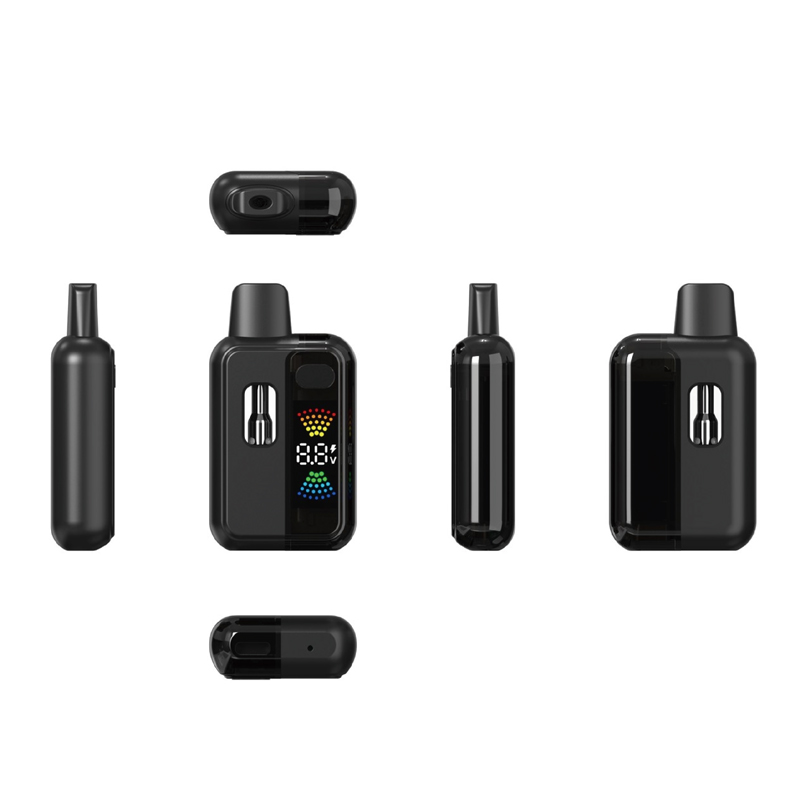
Selecting the perfect components requires careful engineering analysis. Hardware looks identical on the outside, but internal structures vary wildly.
The vaporization industry has largely moved away from quartz and cotton wicks. Today, a ceramic coil vaporizer acts as the absolute gold standard. Ceramic provides beautifully even heat distribution across the element. It also significantly reduces the risk of heavy metal leaching into the extract. Porous ceramic absorbs thick fluids efficiently. This internal absorption ensures a consistent vaporizing surface, drastically reducing the risk of sudden dry hits.
You must respect the mathematical relationship between hole size and fluid thickness. Choosing the wrong aperture guarantees failure.
Raw distillate generally requires four 2.0mm holes to flow smoothly.
Liquid diamonds or resin perform better using four 1.5mm holes.
Over-sizing holes for thin fluids practically guarantees severe bottom-airflow leaks.
Under-sizing holes for thick fluids absolutely guarantees immediate dry hits.
Manufacturers usually choose between traditional glass and medical-grade PCTG plastic. Glass offers superior chemical resistance. Industry experts highly recommend glass for aggressively terpened profiles. High terpene concentrations act as natural solvents and can occasionally degrade certain cheap plastics. Conversely, PCTG offers incredible structural durability. It resists shattering during transit or accidental consumer drops. Both materials succeed when matched correctly to the fluid.
Never compromise on fundamental safety standards. Evaluate your hardware suppliers rigorously before purchasing. Require verifiable heavy metal testing from third-party laboratories. Look specifically for Phase 3 compliance documentation. Ensure your partners manufacture components inside verifiable ISO-certified environments. Trustworthy manufacturers gladly provide this documentation upon request. Shady suppliers will deflect these crucial questions.
Even the absolute best hardware fails if you execute the filling process poorly. Manufacturing operations require strict, repeatable protocols.
Operators usually heat fluid to reduce viscosity for easier machine filling. However, excessive heat introduces severe oxidation risks. You degrade the final product before it ever reaches the consumer. Terpenes evaporate quickly under extreme heat. Maintain safe temperature thresholds strictly during this process. Usually, heating fluids between 40°C and 60°C offers the safest operational balance. It improves mechanical flow without destroying delicate, flavor-producing compounds.
This remains the most critical step in production. Unfortunately, operators and consumers skip it constantly. After filling the hardware, you must let the device sit. Leave the cap completely on. Allow the hardware to rest undisturbed for 12 to 24 hours. The fluid desperately needs time to fully saturate the porous ceramic core. Failure to implement a resting phase guarantees a burnt atomizer on the very first draw. Once a coil burns, you cannot repair the carbonized taste.
Manufacturers generally choose between arbor press and twist-on closures. Press-on caps create an incredibly tight vacuum seal. This internal vacuum is absolutely necessary for proper capillary wicking action. However, they require specialized operational tooling and mechanical presses to close correctly. Twist-on closures offer great DIY flexibility. You can close them easily by hand. This manufacturing flexibility comes at a slight cost to overall hermetic reliability over long storage periods.
Follow this standardized, four-step process to lock in the perfect hardware match for your product.
Define the Extract. Lock in the specific viscosity first. Determine your exact terpene percentage accurately. Confirm the specific extraction method used. This detailed data acts as your technical baseline for all purchasing decisions.
Request Sample Tolerances. Do not buy generic batches blindly. Ask your hardware vendors for cartridges specifically tuned for your exact fluid profile. Give them your viscosity data. Let their engineers recommend the precise aperture size.
Conduct Stress Testing. Evaluate the short-listed hardware rigorously. Fill them, cap them securely, and test them under highly variable temperatures. Leave them in a hot car for a day. Put them in cold storage overnight. Check meticulously for any leaks, clogs, or flavor degradation.
Verify Certifications. Do not accept hardware without documentation. Request recent, batch-specific Certificates of Analysis (COAs). Confirm there is absolutely no lead or heavy metal off-gassing occurring within the heating chamber.
Selecting the correct vaporizer hardware is never a generic purchasing decision. It represents a precise engineering match between fluid dynamics and internal heating architecture. Your extracted fluid and your hardware must work together flawlessly. If they do not, you risk poor consumer experiences, brand damage, and highly expensive product returns. You cannot force thick oils into thin-oil hardware.
For your immediate next steps, rigorously audit your current extract’s viscosity. Match that data directly against your current hardware’s intake hole sizes and ceramic coil porosity. If you spot a mathematical mismatch, correct it immediately. Request targeted samples from certified, compliant manufacturers. Conduct vigorous stress testing before scaling your commercial operations. Protect your final product by prioritizing strict hardware compatibility at every stage.
A: No. Standard e-liquids are far too thin for standard extract hardware. They will instantly flood the internal ceramic core. This flooding causes significant leaks out of the bottom airflow vents. Standard e-liquids require traditional cotton-wicked atomizers, not the high-porosity ceramic elements designed specifically for viscous botanical extracts.
A: This is likely an issue with improper coil porosity or running the device at too high a voltage. Rosin naturally contains microscopic plant lipids. These organic lipids build up quickly on non-specialized heating coils. It requires strictly lower temperatures. You also need highly porous ceramic to continuously wick the material without carbonizing those delicate lipids.
A: Avoid using standard thinning agents like PG, VG, or MCT oil. These cause rapid separation and raise serious health and safety concerns. Instead, utilize natural, cannabis-derived terpenes at extremely safe ratios. Typically, a 5-8% terpene ratio adjusts viscosity safely. Alternatively, upgrade to a dedicated thick oil device to avoid any dilution altogether.


