
Views: 0 Author: Site Editor Publish Time: 2026-06-12 Origin: Site


Imagine spending good money on a premium extract. You attach it onto your favorite device. You inhale deeply. You get zero vapor. Or worse, you taste a harsh, burnt flavor immediately. This hardware dilemma frustrates countless users daily. Many consumers assume all vaping components interchange seamlessly. They believe a similar appearance guarantees perfect functionality. This universal misconception ruins expensive oils constantly. Physical connections alone do not ensure a proper match. You need proper alignment across multiple technical factors. This guide serves as your definitive diagnostic tool. You will learn how to evaluate your current hardware accurately. We will break down every essential matching criterion clearly. Ultimately, you can make informed, risk-free purchase decisions moving forward.
The 510 thread is the industry standard, but physical connection does not guarantee functional compatibility.
Voltage and resistance mismatches are the leading causes of burnt oil and ruined cartridges.
Proprietary pod systems and magnetic adapter drop-in batteries require specific cartridge form factors.
Upgrading to an adjustable voltage battery eliminates 90% of cross-brand compatibility issues.
We must define the 510 standard exactly. It means 10 individual threads spaced across 5 millimeters. This specific measurement dominates the entire modern market. Almost every major manufacturer utilizes this connection standard today. You will frequently see a 510 thread battery in dispensaries everywhere. It acts as the default industry baseline.
You must understand why threading falls short functionally. Screwing a unit together represents just step one. Discrepancies exist beneath the surface constantly. Tank widths vary significantly across different brands today. Standard units measure exactly 10.5mm across. Larger capacities reach 11.2mm or even wider. Airflow designs differ wildly among leading manufacturers. Center pin depths also vary by fractions of a millimeter. A slight gap means your device fails to fire altogether. It looks perfectly attached but performs terribly.
You must contrast proprietary systems against open designs. Open systems embrace the standard 510 threading openly. Closed-loop pod systems reject it completely. Brands like PAX or Stiiizy use highly proprietary connections. They force you into their specific closed ecosystem. Recognizing this distinction filters out incompatible setups immediately. You cannot attach a proprietary pod to a standard threaded base. They require entirely different form factors to function properly.
Assuming two items work together just because they screw together easily.
Forcing a 510 tank onto a slightly cross-threaded connection.
Buying expensive proprietary pods without owning the specific branded base.
Pen-style versus concealable designs matter immensely for daily use. Pen-style designs offer maximum physical flexibility for users. They leave the attached tank exposed completely during operation. You can attach oversized atomizers without worry here. Drop-in concealable units hide the tank inside the chassis tightly. These designs enforce strict millimeter limits always. They usually cap at exactly 10.5mm or 11mm wide. Forcing a wide tank into a narrow chamber causes permanent damage. It gets stuck and ruins both individual devices.
Magnetic adapters complicate this physical fit dimension further. Drop-in units often use small magnetic rings. You screw the ring onto your tank base. Then you drop it down into the chamber to connect. User error happens frequently during this specific process. An over-tightened ring pushes the internal contact pin down deeply. This mimics a complete hardware compatibility failure perfectly. Users often throw away perfectly good hardware due to this simple mistake.
Voltage and resistance dictate your vapor quality strictly. Using high fixed voltages on low-resistance ceramic coils creates massive burn risks. The heating element gets too hot too quickly. It scorches the delicate terpenes instantly upon firing. It ruins the entire extract profile for good. You taste burnt popcorn instead of premium natural flavors.
The solution requires a direct hardware upgrade usually. We strongly recommend an adjustable voltage battery for modern users. It acts as a mandatory standard today. You absolutely need varying temperatures for different concentrates. Live resin demands gentle, low heat settings. Standard thick distillate requires much higher heat for proper vaporization. Variable voltage gives you complete control over this crucial process. You dial in the exact power needed.
Extract Voltage Matching Chart | |||
Extract Type | Typical Viscosity | Ideal Voltage Range | Heat Sensitivity |
|---|---|---|---|
Live Rosin | Very Thick | 1.8V - 2.2V | Extremely High |
Live Resin | Medium-Thick | 2.2V - 2.6V | High |
Standard Distillate | Thick | 2.8V - 3.4V | Low |
Activation styles impact compatibility deeply. Draw-activated devices lack physical buttons entirely. They rely solely on internal air pressure sensors. They only work if your tank features bottom-airflow holes. The sensor activates when you pull air through the bottom intake. If you use a top-airflow tank, it will never fire. The air bypasses the internal sensor completely. The device remains utterly dead.
Button activation superiority solves this frustrating issue entirely. Pressing a button sends power manually every single time. This guarantees higher vape cartridge battery compatibility across the board. Button units also feature vital pre-heat functions often. They warm up thicker oils gently before you inhale deeply. This prevents annoying clogs and ensures smooth, consistent hits.
Interface quality separates blind vaping from informed vaping clearly. Simple LED indicators leave you guessing constantly. A green light might mean 2.4V or 3.4V. You never truly know the exact power level applied. This causes blind vaping and frequent burnt hits.
Comparing this primitive setup to an OLED screen battery reveals a stark difference immediately. Digital interfaces provide exact voltage readouts clearly. They include battery life percentages and helpful puff counters. You gain precise control over your daily sessions. Exact data reduces the risk of burning premium products significantly. You see exactly what your device does in real time.
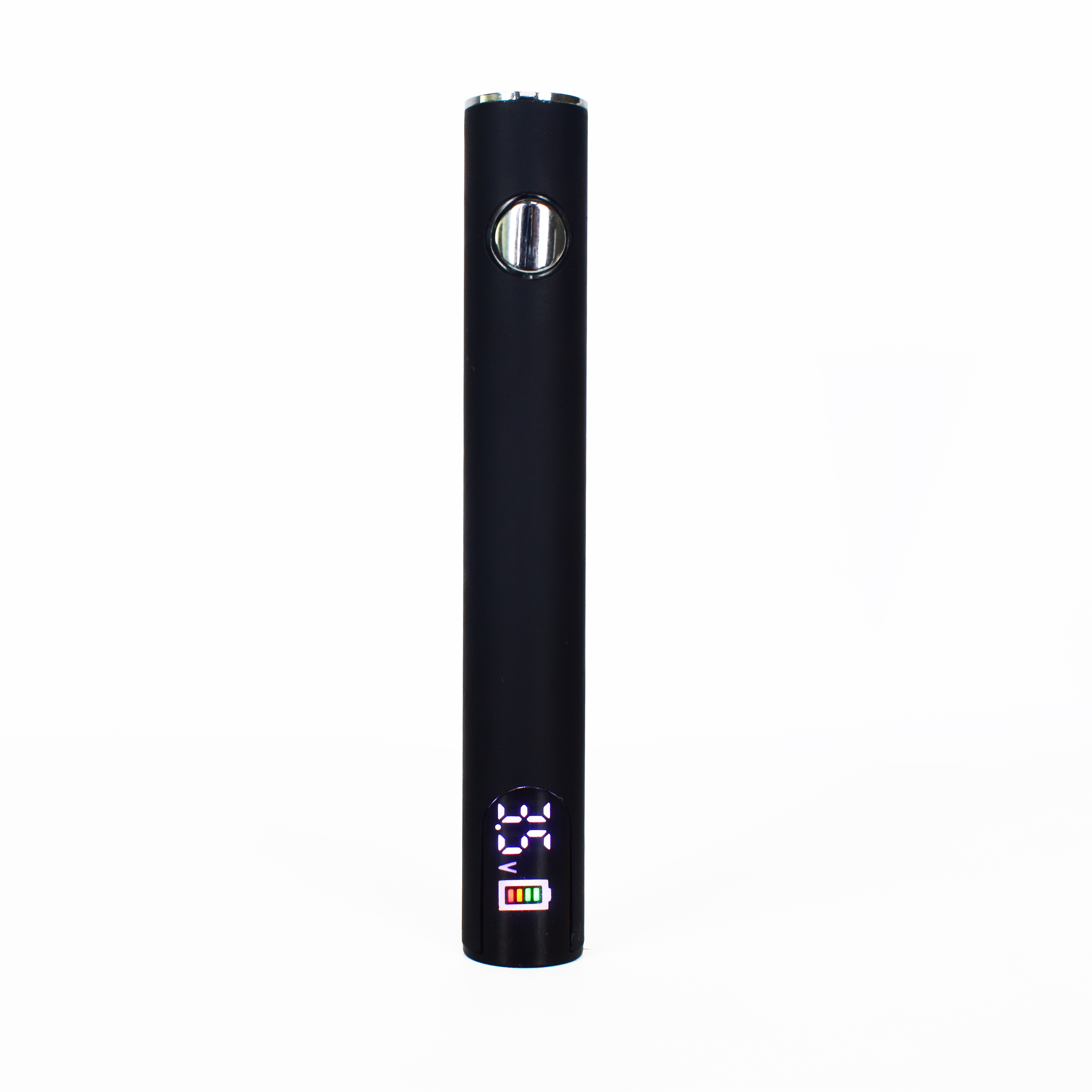
Hardware failures happen often even with premium gear. We compiled the most frequent matching issues below. You can diagnose them quickly using these straightforward steps. Proper diagnosis saves you from buying unnecessary replacement parts.
Hardware Diagnostic Chart | ||
Observed Issue | Probable Cause | Diagnostic Step / Recommended Fix |
|---|---|---|
Blinking Light / No Vapor | Connection pin depression or oil residue blocking the contact. | Gently lift the center pin on the cartridge using a paperclip. Clean all threads thoroughly with isopropyl alcohol and let dry. |
Extreme Draw Resistance (Clogged Feeling) | Top-airflow cartridge paired with a closed-510-connection battery. Air cannot enter the system. | Verify where the cartridge pulls its air from exactly. Ensure the battery base has matching open air channels cut into the metal. |
Harsh, Burnt Taste Immediately | Voltage is set far too high for the current extract viscosity. | Immediately stop firing the device. Step down to 2.0v - 2.4v if using a variable voltage unit. Let the wick re-saturate briefly. |
Never over-tighten your tanks onto the base. Finger-tight is perfectly sufficient.
Clean your contact pins weekly using a cotton swab and rubbing alcohol.
Store your devices upright to prevent oil from leaking into the connection chamber.
Finding the perfect match requires understanding your specific personal needs. We categorized users into three distinct functional profiles below. Review them to find your ideal hardware setup.
For the Extract Connoisseur (Live Resin/Rosin):
You prioritize flavor and terpene preservation above all else.
Requirements: You need sub-2.0V capabilities urgently. Pre-heat functions help loosen stiff rosins smoothly. An OLED interface guarantees absolute precision for delicate oils.
For the Stealth/On-the-Go User:
You need absolute discretion and high portability daily.
Requirements: Look for a drop-in concealable design carefully. Auto-draw capability keeps usage simple in public. Ensure a minimum 400mAh capacity for daily travel. Pay strict attention to device chamber width limits. You need a highly compact cartridge battery here.
For the Heavy User/Durability Seeker:
You vape frequently and demand reliable power constantly.
Requirements: Choose a pen-style or heavy-duty chassis design. Seek a 500mAh+ capacity for extended daily sessions. USB-C fast charging reduces annoying downtime significantly. Button-activation offers maximum versatility. A rugged rechargeable cart battery fits this demanding lifestyle perfectly.
Follow this simple checklist before purchasing any new hardware components. It saves you money and eliminates extreme user frustration.
Measure First: Verify the exact diameter of your preferred cartridges. Standard models sit at exactly 10.5mm. Oversized models measure 11mm or wider. Never buy a concealable unit without checking this metric first.
Check the Airflow: Identify where your cartridges draw air from precisely. Note if they use top or bottom airflow channels. Match this to your intended device's sensor style.
Verify Extract Type: Match the viscosity of your typical oil to the voltage range of the intended battery. Live Rosin needs very low temperatures to thrive. Thick distillates need capable pre-heating features to vaporize properly.
Make the Upgrade: Transition away from cheap disposable or fixed-voltage units quickly. Invest in reliable modern hardware that guarantees cross-compatibility effectively.
True functional compatibility goes far beyond simple screw threads. We must reiterate that while vape cartridge battery compatibility is largely anchored by the 510 thread, true compatibility involves much more. It requires a precise mix of physical dimensions, power output, and airflow mechanics. Neglecting any of these dimensions leads to poor performance or ruined extracts.
Your final recommendation remains straightforward and highly practical. Invest in a variable voltage, button-activated 510 battery today. Doing so future-proofs your entire setup beautifully. It protects you against rapidly evolving cartridge designs. It properly handles wildly varying extract types seamlessly. Make the smart upgrade and enjoy perfectly consistent sessions every single time.
A: No. While the threads match, physical width constraints in drop-in batteries often reject wider cartridges. Furthermore, voltage mismatches can easily burn out low-resistance coils. You must verify physical dimensions and power compatibility first.
A: This blinking sequence typically indicates short-circuit protection activating. It usually happens due to connection pin issues. The cartridge pin might be depressed too far, or oil residue is blocking the electrical contact entirely. Clean the threads and gently lift the pin to fix it.
A: Yes. It serves as a crucial cost-saving tool. Different extracts vaporize at vastly different temperatures. Applying high fixed voltage to delicate live rosin burns the premium extract instantly. Adjustable settings prevent you from ruining expensive oils.
A: The standard 510 threading on the magnetic adapter fits almost all cartridges. However, the physical width limits of the device chamber dictate true compatibility. If your cartridge is wider than the chamber opening, it will not drop in, rendering the adapter useless.


