
Views: 0 Author: Site Editor Publish Time: 2026-04-24 Origin: Site


Many buyers hesitate before upgrading their vaping devices. They often assume choosing a Variable Voltage Vape Battery means sacrificing daily battery life. This fear stems from seeing high-performance devices die quickly in the hands of heavy users. However, power consumption does not depend solely on the presence of a variable chip. It relies heavily on the intricate relationship between user settings, coil resistance, and overall device efficiency.
Upgrading does not automatically doom you to constant recharging. Modern devices use sophisticated electronics to manage energy loads efficiently. In this article, we will explore the engineering realities behind power consumption. We will clarify how these dynamic devices actually handle energy. You will learn a clear framework for evaluating hardware, adjusting settings, and deciding if a variable voltage device represents the right investment for your habits.
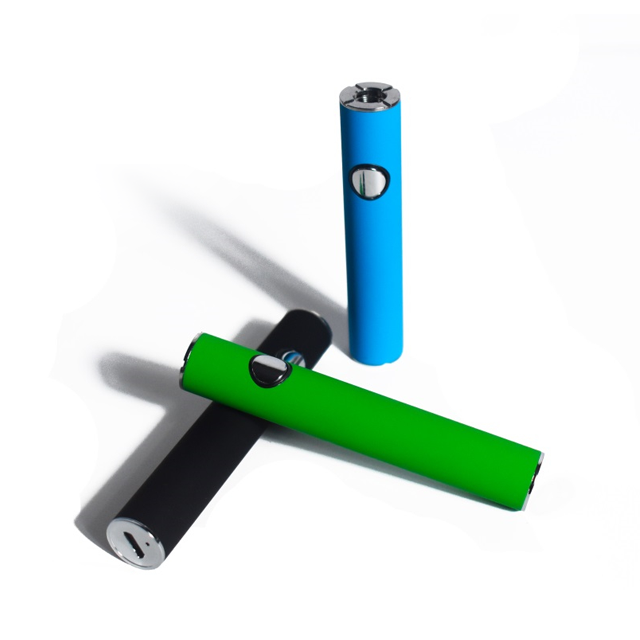
It’s About Output, Not Capability: A variable voltage vape battery does not inherently consume more power; it only drains faster if set to a higher voltage than a fixed equivalent.
Efficiency Matters: Advanced variable batteries often feature better DC-DC converters and larger capacities (mAh) to offset potential high-voltage power grabs.
The Coil Variable: Low-resistance coils with high thermal mass are the true culprits behind rapid battery drain, often causing users to overcompensate by cranking up the voltage.
Flavor Optimization Saves Power: Finding the "sweet spot" (e.g., lower voltage for delicate terpenes) often leads to *less* power consumption compared to brute-force fixed-voltage devices.
A variable voltage battery operates on a broad functional spectrum. If you set it to 3.7V, it consumes the same baseline power as a standard 3.7V fixed battery. We assume identical hardware efficiency here. The variable control function itself barely uses any passive electricity. You do not lose battery life simply because the device possesses adjustable features.
Think of your device like a car. This mental model explains the mechanics perfectly. Voltage represents the gas pedal. Wattage, or resulting heat, equals your actual speed. Coil resistance, measured in Ohms, acts as the terrain. Pushing the gas pedal harder on a steep hill burns fuel aggressively. Similarly, applying higher voltage to a low-resistance coil rapidly depletes your power cell. You control the gas pedal directly.
Manufacturers understand these dynamics perfectly well. They anticipate higher power usage from enthusiastic consumers who prefer intense heat. Therefore, they typically build a Variable Voltage Vape Battery using higher mAh (milliampere-hour) ratings. They do this to compete with fixed counterparts. This extra internal capacity effectively offsets the accelerated drain caused by your occasional high-voltage sessions. You get a larger fuel tank to support the faster engine.
Direct correlation completely rules this factor. Operating your device at 4.2V inherently draws significantly more current from the cell than operating at 2.4V. If you maximize the output constantly, you empty the battery faster. Every incremental click upward on your voltage dial increases the electrical load. You control the primary drain rate directly through your settings menu.
Ohm’s Law dictates exactly how current flows through your device. Lower resistance, specifically in sub-ohm setups, pulls significantly more current from the battery. We must also carefully consider "Thermal Mass." Thicker coils contain larger amounts of metal. They take much longer to heat up to vaporization temperatures. This delay often frustrates users. They usually compensate by taking longer draws. Alternatively, they raise the voltage to force faster heating. Both actions heavily tax the battery capacity. Common Mistake: Using massive coils for low-profile stealth vaping wastes massive amounts of energy.
Let us look closely at the underlying hardware mechanics. Internal DC-DC converters manage power delivery to the coil. "Bucking" means stepping down the voltage from a fully charged battery. This specific process operates highly efficiently. Conversely, "Boosting" means stepping up the voltage as the battery naturally dies. The chip attempts to maintain stable performance. Boosting works your hardware much harder. It burns through the remaining capacity rapidly and generates excess internal heat.
Your chosen consumable drastically affects hardware strain. Thick, high-VG liquids resist wicking through cotton. Dense cannabis distillates behave similarly inside ceramic cartridges. They require intense thermal energy to vaporize properly. Thinner, high-PG liquids vaporize easily at much lower temperatures. If you use thick oils, you naturally push the voltage higher to achieve proper vaporization. This indirectly causes higher power consumption.
High-voltage settings absolutely consume more power per second. However, they often result in much shorter necessary puff durations. You might achieve your desired vapor production in two seconds instead of five. Mathematically, this behavioral shift can balance out the overall energy spent per session. A fast, hot hit might use the exact same total energy as a long, cool drag. Your personal inhalation style shifts the final efficiency equation.
These simpler units offer foolproof operation. You just inhale or press a single firing button. They provide highly predictable battery depletion day after day.
Pros: Extreme ease of use, durable basic circuitry, consistent daily battery drain. They rarely require troubleshooting.
Cons: Complete inability to adapt to different coil resistances. They often burn delicate extracts. You remain forever limited to a rigid, "one size fits all" vapor production level.
These advanced devices prioritize precise user customization. You gain the ability to hit the perfect "sweet spot" for highly specific flavor profiles. You can lower heat to preserve delicate terpenes or raise heat to generate dense clouds.
Pros: Unmatched versatility across different materials. Superior flavor preservation. Broad compatibility with varying cartridges.
Cons: Steeper learning curve for pure beginners. You face a distinct risk of dry hits or rapid battery drain if misconfigured.
Variable power represents the necessary standard for modern users. You need this flexibility when handling multiple types of cartridges. Moving between standard 510 threads and specialized sub-ohm tanks demands adjustable output. Varying extract viscosities also require fine-tuned heat to avoid ruined flavors.
Feature Category | Fixed Voltage Models | Variable Voltage Models |
|---|---|---|
Output Adaptability | Low - Single factory output | High - Broad tuning spectrum |
Ease of Operation | Foolproof (Plug and play) | Requires basic voltage knowledge |
Battery Predictability | Highly stable daily decline | Varies heavily by user settings |
Extract Compatibility | Standard PG/VG blends only | Thick distillates & thin oils alike |
Start Low and Go Slow: The industry universally supports this standard best practice. Always begin at the lowest available setting, typically around 2.4V. Incrementally increase the power from there after testing the vapor. This cautious approach utterly prevents burning fresh coils. It also stops you from wasting precious power on unnecessary heat.
Match Voltage to Extract and Coil: You must deliberately align your power output with your materials. Follow this general application guide to optimize efficiency:
2.4V – 3.2V Range: Ideal for delicate live resins and volatile terpenes. Best paired with higher-resistance coils. This specifically maximizes flavor clarity and strongly minimizes battery drain.
3.3V – 4.2V Range: Suited for thick distillates and intense cloud-chasing sessions. Use this with low-resistance coils. This maximizes vapor density but noticeably accelerates battery depletion.
Utilize Preheat Functions Judiciously: Thick oils aggressively resist vaporization when cold. Using a simple 2-click preheat setting softens thick oils efficiently. It applies a gentle, low-voltage warming pulse. This completely prevents the need for long, high-voltage drags. Forcing cold oil stresses the battery immensely and risks dry hits. Best Practice: Run the preheat cycle exactly once, then take normal draws.
Monitor Battery Life Degradation: Every lithium-ion cell physically ages over time. As it gets older, its internal electrical resistance naturally increases. It struggles heavily to deliver sustained high power. Lowering your daily voltage setting on an aging device helps tremendously. It reduces internal strain on the degraded chemistry. This specific strategy extends the usable lifespan before you must seek a recharge.
Always base your hardware requirements on your planned daily usage. For users planning to vape at high voltages frequently, establish a strict baseline requirement. Look for at least 350mAh to 500mAh of internal capacity. This moderate capacity buffer effectively helps you avoid frustrating midday charging sessions. Heavy users should aim even higher to ensure uninterrupted operation.
You should clearly distinguish between manual and automatic adjustment systems. Variable voltage completely requires manual tuning. You must physically match the output dial to your specific coil. Intelligent variable wattage (VW) devices act differently. They automatically calculate the exact necessary voltage based on the attached coil's resistance. They provide a smarter, far more consistent draw across different tanks.
Always evaluate the primary charging port technology before buying. Compare modern Type-C fast charging against outdated standard 510 USB chargers. Type-C drastically reduces actual downtime. It completely mitigates the "fast drain" concern by allowing extremely rapid top-ups. Furthermore, genuine pass-through technology lets you puff safely while plugged into the wall.
Look carefully for high-quality integrated circuits. Reliable devices always include essential electronic safety nets. You want robust short-circuit protection to prevent catastrophic failures. You absolutely need strict overcharge protection to preserve cell health. Look for an automatic cutoff feature, usually triggering after 8 to 10 seconds of continuous firing. This specifically prevents accidental pocket firing and stops massive power waste.
A variable voltage device does not blindly drain your power cell. It only consumes more power if you deliberately choose to drive it at maximum settings. When you use it intelligently, it performs with exceptional efficiency. Its inherent ability to scale down power can actually extend your daily battery life compared to fixed-voltage models stuck at higher outputs. You possess total control over the energy consumption rate.
Take a brief moment to evaluate your primary vaping material. Consider whether you prefer thick, viscous oils or thin, delicate e-liquids. Match your typical coil resistance directly to those specific needs. Finally, review a curated product category page of reliable variable devices. Prioritize units boasting high mAh ratings and Type-C charging ports to secure the best possible long-term experience.
A: There is no single universal setting for every user. Keep it between 2.4V and 3.2V for maximizing flavor and protecting delicate terpenes. Raise it between 3.3V and 4.2V for vaporizing thick oils or producing large clouds. Always start at the lowest setting and adjust upward slowly.
A: Yes. Applying high voltage, particularly anything above 4.0V, to a high-resistance coil can instantly burn the cotton wick. It will also scorch delicate live resin extracts. This permanently degrades the flavor profile for the entire lifespan of that specific cartridge.
A: Variable voltage requires you to manually match your power output to the attached coil. Variable wattage functions exactly like an automatic transmission. The internal chip detects the coil's precise resistance. It then automatically adjusts the voltage on the fly to hit your exact target heat level.
A: Rapid depletion usually occurs due to a specific combination of factors. Running the device continuously at maximum voltage drains it fast. Using low-resistance sub-ohm coils with high thermal mass demands huge current. Finally, natural lithium-ion battery degradation over time reduces the total capacity it can effectively hold.


